Paper Organizing101: How to Organize Mail, Bills, and Important Documents for Good
A perennial pain point for households and home offices
If there’s one area of the home that consistently causes stress, overwhelm, and clutter, it’s paper. Mail piles up, bills get lost, important documents disappear just when you need them, and before you know it, you’re drowning in stacks of paper you’re afraid to throw away.
As a Certified Professional Organizer, I can confidently say: you are not alone. Paper clutter is one of the most common struggles in both homes and home offices. The good news? With the right system in place, you can organize your mail, bills, and important documents once and for all—and keep it that way.
Let’s break it down into simple, manageable steps.
Why Paper Clutter Happens
Paper enters our homes daily—mail, school papers, receipts, medical forms, statements, warranties, tax documents, and more. Without a clear system, these papers quickly pile up because:
We don’t know what to keep or toss
We’re afraid of throwing something important away
There’s no designated “home” for paperwork
We plan to deal with it “later”
The result? Visual clutter, wasted time searching, missed deadlines, and unnecessary stress
Step 1: Create a Simple Paper Flow System
The key to staying organized is preventing paper from piling up in the first place.
Set up a simple paper flow with three main categories:
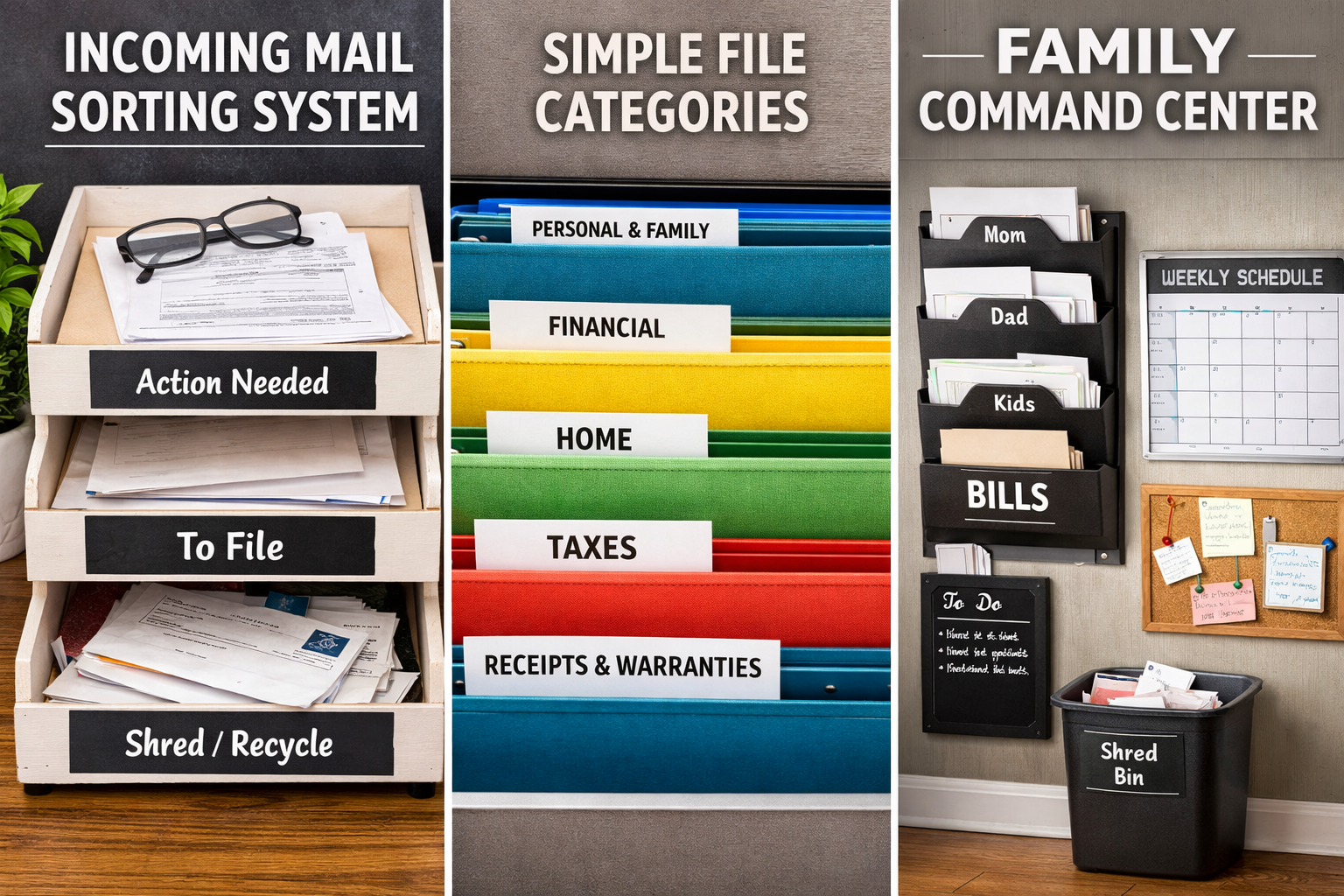
1. Incoming Mail Zone
Designate one small spot where mail is opened immediately—counter, desk tray, or wall sorter.
Open mail daily and sort it right away into:
Action Needed
To File
Recycle/Shred
Avoid letting unopened mail stack up—it only creates anxiety and overwhelm.
2. Action Center (Bills + To-Dos)
This is where anything requiring attention lives:
Bills to pay
Forms to complete
Invitations
School paperwork
Use a simple file folder, tray, or binder labeled “Action” or “To Do.”
Schedule two specific times per week to process this pile so it never gets out of control.
3. Long-Term Storage for Important Documents
This is your filing system for paperwork you need to keep but don’t access daily.
Step 2: Set Up a Simple Filing System
You do not need a complicated filing cabinet with 50 categories. Simple always wins.
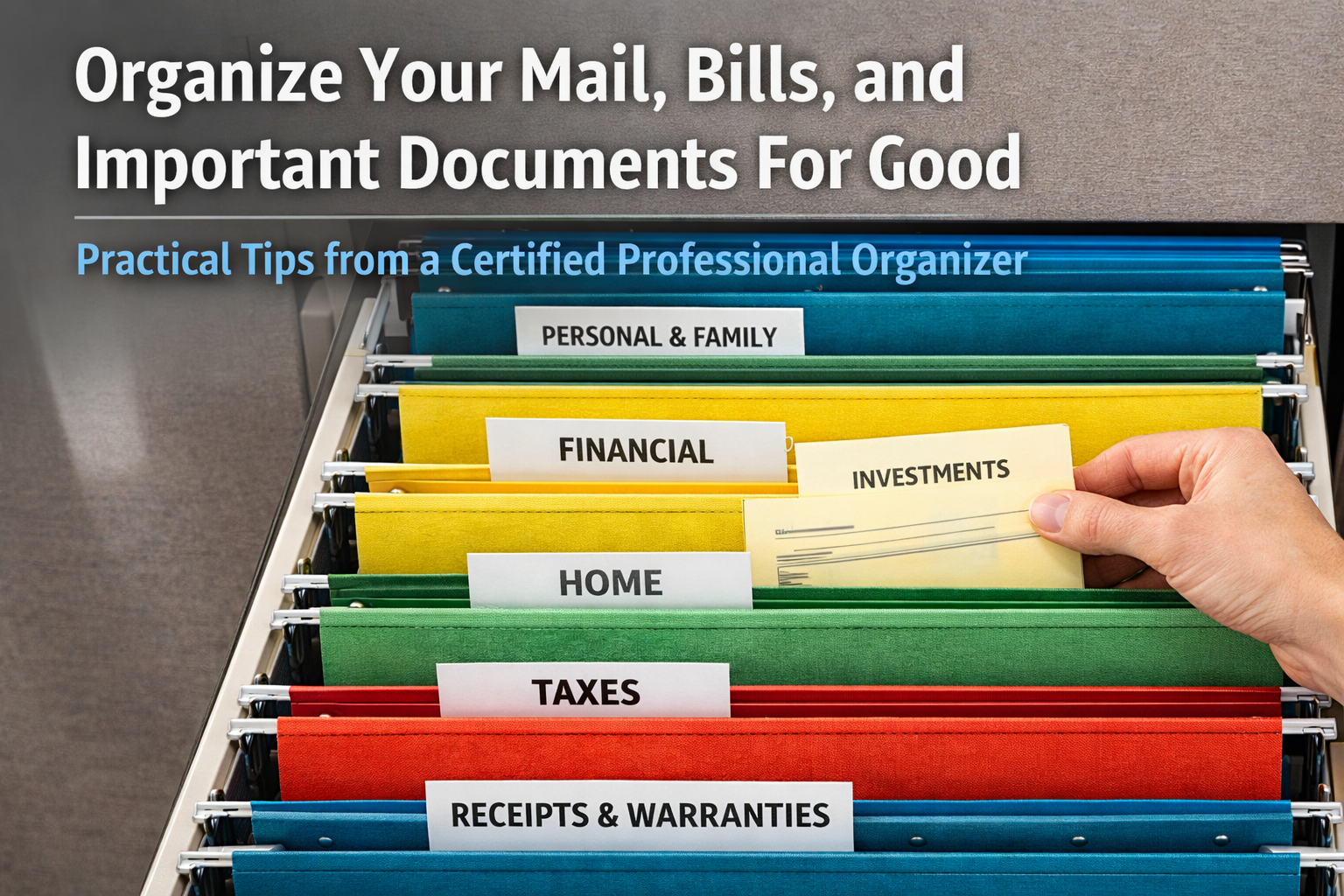
Core File Categories
Here are the essential categories most households need:
Personal & Family
Identification (birth certificates, passports, Social Security cards)
Medical records
School records
Financial
Bank statements
Investment accounts
Loan documents
Insurance policies
Home
Mortgage or lease
Home insurance
Utility records
Appliance manuals & warranties
Taxes
Current year
Past years (keep 7 years unless advised otherwise)
Receipts & Warranties
Big purchases
Home improvements
Use clearly labeled folders in a filing drawer, file box, or portable accordion folder.
Step 3: Decide What to Toss (This Is Key!)
Most paper does not need to be kept.
Shred Immediately:
Credit card offers
Bank solicitations
Medical statements (after confirming payment)
Old utility bills
Expired insurance documents
Recycle:
Catalogs
Flyers
Coupons you won’t use
General junk mail
Keep Digitally When Possible:
Statements
Receipts
Manuals
Scanning documents and storing them digitally reduces paper clutter dramatically
Step 4: Go Digital Strategically (Not Overwhelmingly)
You don’t need to go 100% paperless to stay organized.
Start with:
Paperless billing
Digital bank statements
Cloud storage for receipts and manuals
Create clearly labeled folders on your computer or cloud system that mirror your physical files.
Consistency matters more than perfection.
Step 5: Build a 10-Minute Weekly Paper Routine
This is the secret to staying organized for good.
Once a week:
Open mail
Pay or schedule bills
File paperwork
Shred what’s no longer needed
Ten minutes a week prevents hours of frustration later
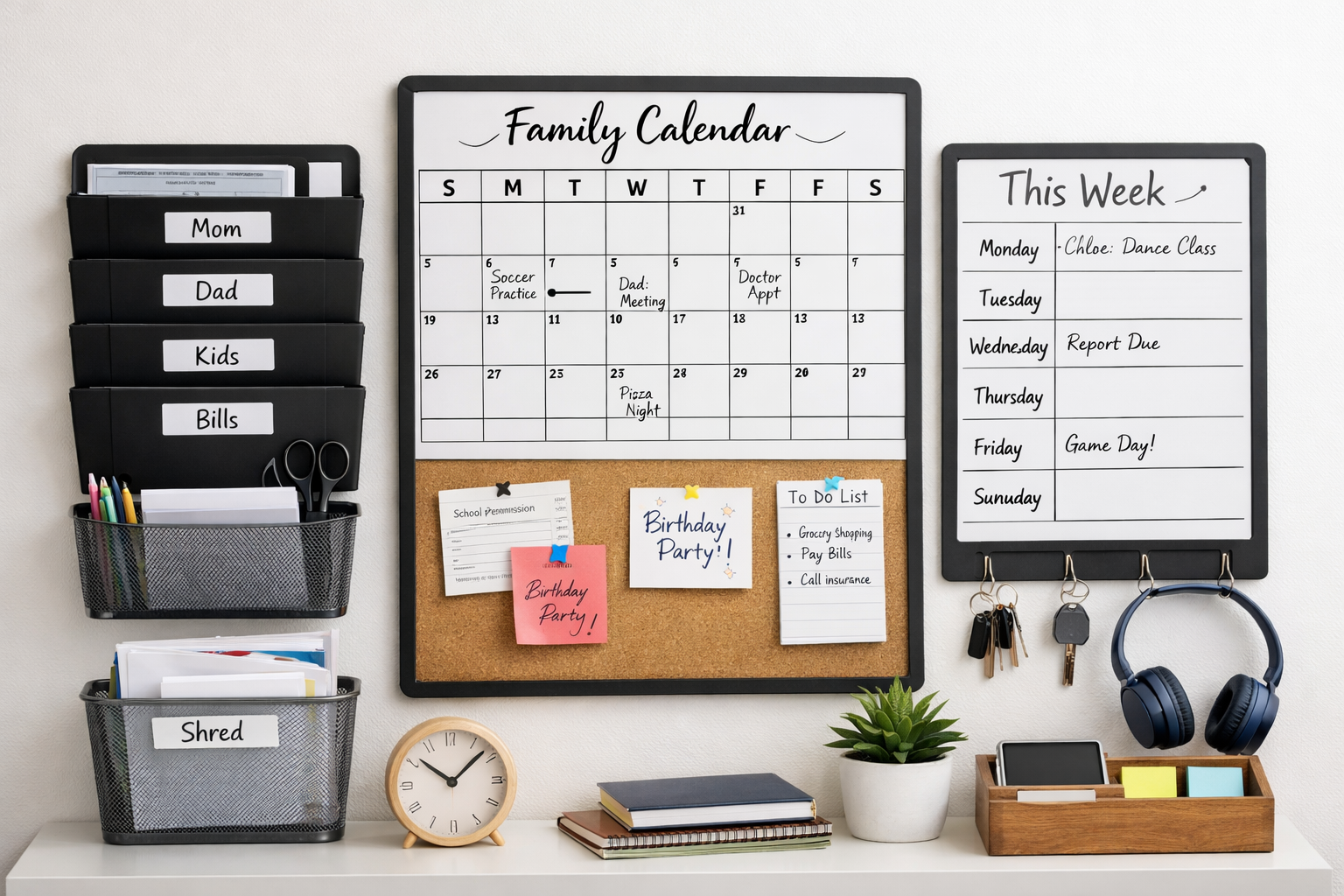
Step 6: Create a Family Paper Command Center
For busy households, a centralized system keeps everyone on track.
Consider including:
Wall file for each family member
Bill folder
Weekly planner
Shred bin
This ensures paper doesn’t travel all over the house and pile up in random places.
Common Mistakes to Avoid
Creating overly complicated filing systems
Keeping “just in case” papers forever
Letting mail sit unopened
Storing paperwork in multiple locations
Simple systems are sustainable systems.
The Peace of an Organized Paper System
Imagine:
Knowing exactly where your documents are
Paying bills on time with ease
Finding paperwork in seconds
Feeling calm when mail arrives
An organized paper system doesn’t just reduce clutter—it reduces stress, saves time, and creates peace of mind.
Final Thoughts from a Certified Professional Organizer
Organizing your mail, bills, and important documents is one of the most impactful systems you can put in place for your home and life. When done correctly, it becomes effortless to maintain.
If paper clutter has been a constant frustration, remember:
You don’t need perfection. You just need a simple system that works for you